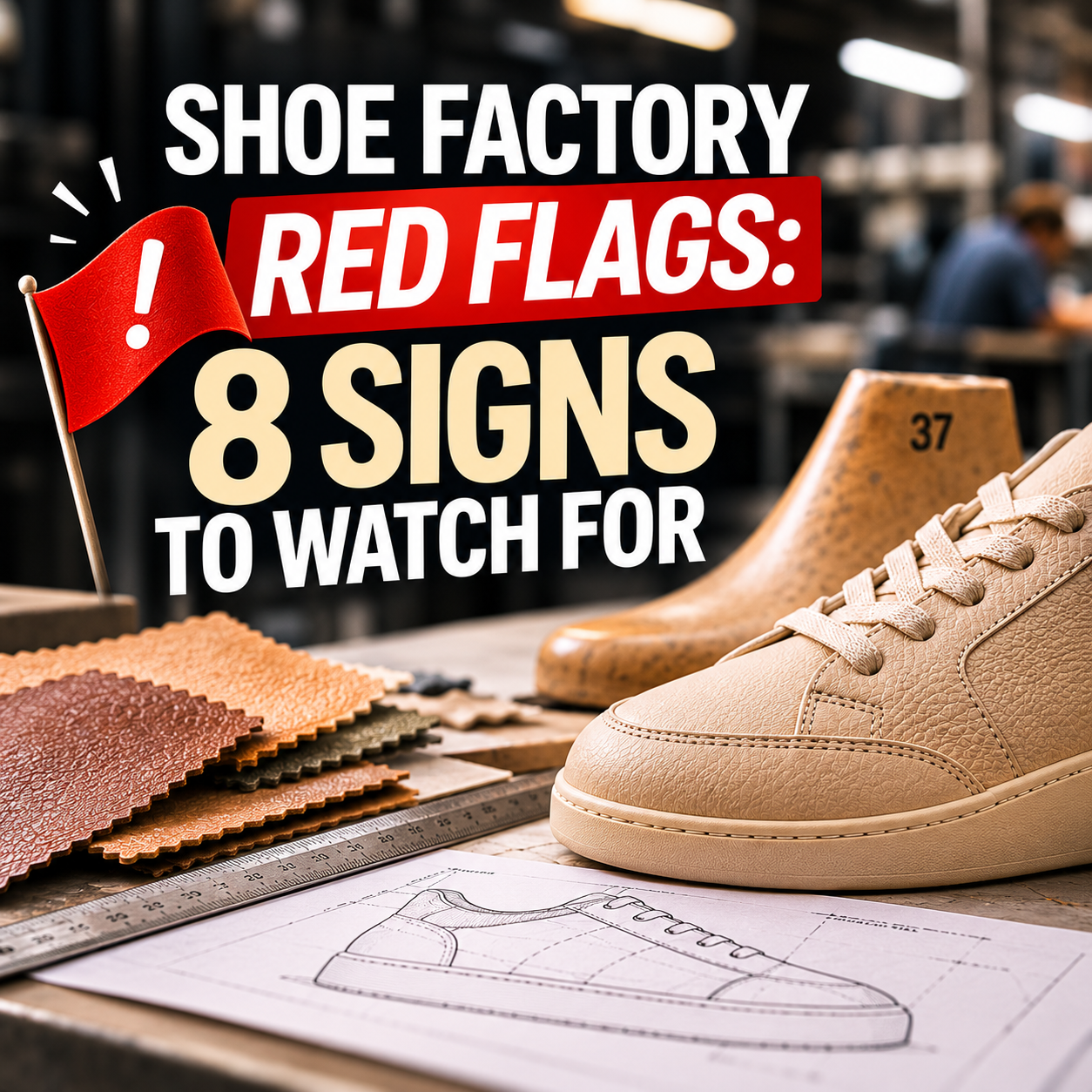
Selecting the right shoe factory is one of the most important decisions a footwear brand can make. The factory you choose will influence product quality, development speed, pricing, delivery reliability and, in many cases, your brand’s reputation. A good manufacturing partner can help improve a product before it reaches production, while the wrong one can create delays, hidden costs and quality issues that are difficult to fix once orders are underway.
In fact, many sourcing problems do not start on the production line. They begin much earlier, during initial conversations, quotations, sample reviews and technical discussions. This is where the first shoe factory red flags often appear, although they can be easy to overlook when a factory offers an attractive price, a fast lead time or a confident answer to every question.
For brands working with new suppliers or entering new product categories, recognizing these warning signs early is essential. It helps teams make better sourcing decisions, protect margins and avoid partnerships that may become problematic later.
1. Poor Communication
Communication is one of the clearest indicators of how a future manufacturing partnership will work. If a manufacturer takes too long to reply before an order is confirmed, gives unclear answers or constantly changes information, this should be taken seriously. Development and production require a constant flow of accurate information about materials, lasts, soles, fitting comments, price targets, delivery dates and quality expectations.
Poor communication at the beginning rarely improves once a project becomes more complex. In fact, it usually becomes more visible when pressure increases. A reliable manufacturer does not need to answer everything immediately, but should communicate with structure, honesty and consistency.
Explore what is a sourcing agency and how to avoid the poor communication problem here
2. A Price That Seems Too Good to Be True
Price is always important, but an unusually low quotation should raise questions. In footwear manufacturing, price is connected to materials, components, construction, labor, finishing, packaging, quality control and service. If one factory is significantly cheaper than others, it is important to understand why.
Sometimes the difference is legitimate: a factory may have better access to certain materials, a more efficient production setup or experience with a product type that fits its capabilities. However, an unrealistically low price may hide lower-grade materials, simplified construction, less rigorous finishing or unexpected costs that appear later.
A strong manufacturing partner should be able to explain its pricing, not simply defend it. Transparency in costing builds trust, while a lack of clarity creates risk.
3. The Factory Says Yes to Everything
At first, a manufacturer that agrees with every request may seem easy to work with. In reality, this can be a major warning sign. Footwear is technical: not every material works with every construction, not every outsole is suitable for every upper, and not every delivery date or target price is realistic.
Experienced manufacturers know when to challenge a request. They suggest alternatives, explain limitations and help brands avoid mistakes before they become expensive. A factory that says yes to everything may be trying to secure the order without fully evaluating the consequences.
The best partners are not always the ones who agree the fastest. They are often the ones who ask better questions.
4. Lack of Transparency About Development and Production
A professional shoe factory should be able to explain how development and production are managed. This includes sampling timelines, material sourcing, fitting rounds, production planning, quality control checkpoints and expected lead times. If these details are unclear or avoided, the brand may struggle to understand what is happening behind the scenes.
Production capacity is another important consideration. A factory may produce beautiful samples but still struggle to handle production at the required volume, complexity or schedule. Brands should understand whether the manufacturer has experience with similar products, quantities and quality expectations.
Transparency does not mean revealing confidential client information or internal margins. It means providing enough visibility for the brand to make informed decisions.
5. Inconsistent Sample Quality
Samples are not just prototypes. They demonstrate how a factory interprets instructions, solves technical issues and pays attention to detail. One imperfect sample does not automatically mean a factory is unsuitable, as footwear development always involves adjustments. However, repeated issues with finishing, proportions, fitting, stitching, material handling or construction should never be ignored.
If a factory cannot identify problems in its own samples, this may indicate a weak internal quality culture. A good manufacturer does not simply send a sample and wait for criticism. It reviews the sample, identifies potential improvements and communicates clearly about the adjustments needed.
6. No Genuine Interest in Your Brand
A footwear project cannot be evaluated properly without understanding the brand behind it. The target customer, retail price, positioning, distribution channel and expected quality level all influence manufacturing decisions. A product for a contemporary fashion brand may require different materials, finishing and flexibility from one developed for a large retailer or a technical footwear label.
If a manufacturer does not ask about these details, it may be treating the project as just another order. This can lead to poor recommendations, unsuitable materials or a product that does not match the brand’s expectations.
A strong factory wants to understand the commercial context because it helps make better technical decisions.
7. No Clear Quality Control Process
Quality control should not be treated as a final inspection only. It needs to be present throughout the process, from material reception and cutting to stitching, lasting, assembly, finishing and packing. When a factory cannot clearly explain how quality is monitored, the brand may only discover problems when it is too late.
This is particularly important in footwear because many defects become expensive or impossible to correct once production has advanced. A small issue in cutting or stitching can become a much bigger problem after lasting and finishing. Preventive quality control is always better than corrective action.
8. The Factory Avoids Difficult Conversations
Every production project faces challenges. Materials can be delayed, components may need adjustment, fitting can take longer than expected and costs can change when specifications evolve. What matters is not whether issues appear, but how they are handled.
A reliable manufacturer communicates problems early and proposes solutions. A risky manufacturer hides issues, delays updates or waits until the brand has no time to react. Avoiding difficult conversations is one of the most dangerous warning signs in footwear sourcing because it removes the opportunity to solve problems before they become critical.
How Can Brands Reduce Risk When Selecting a Shoe Factory?
The best way to reduce sourcing risk is to evaluate the manufacturer before the relationship becomes too dependent. Brands should compare quotations carefully, review samples with a critical eye, ask about production planning, clarify lead times and understand how quality control is managed. Whenever possible, factory visits or local representation can provide valuable insight into how the manufacturer works in practice.
It is also important to share clear information. A factory can only perform well if the brand provides accurate technical files, realistic timelines, target prices and clear expectations. Good sourcing is not one-sided; it is a collaborative process that depends on clarity from both sides.
How Do You Recognize a Reliable Shoe Manufacturing Partner?
Selecting a shoe factory is not about finding the cheapest supplier or the fastest answer. It is about identifying a partner that can support the brand’s product, quality standards and long-term goals. The strongest factories usually show their value early: they communicate clearly, ask relevant questions, explain limitations and take responsibility for the process.
Red flags should not always lead to immediate rejection, but they should always lead to deeper questions. When a brand pays attention to these early signs, it becomes easier to avoid costly mistakes and build stronger manufacturing partnerships.