
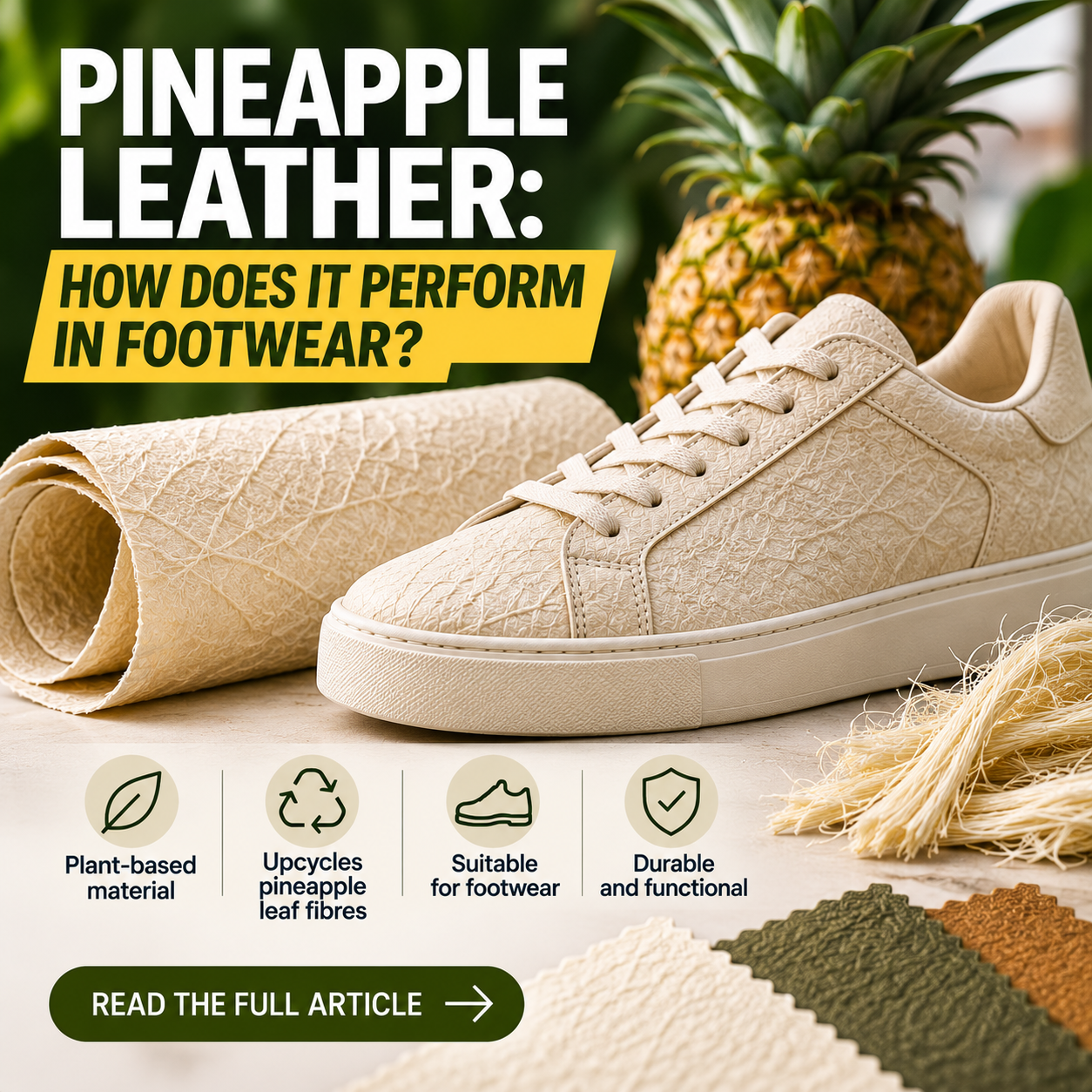
How does pineapple leather really perform when compared to traditional materials? As sustainable fashion gains momentum, understanding the technical and functional qualities of pineapple leather (Piñatex) becomes essential, especially for brands exploring more sustainable footwear materials.
Pineapple Leather, Texture and Aesthetics
Pineapple leather has a distinctive texture that blends natural irregularity with a refined finish. Unlike many synthetic vegan leathers, which are often plastic-based, Piñatex retains a unique organic pattern, giving products an authentic, tactile look.
It can be dyed, embossed or coated, offering design flexibility for brands seeking originality without compromising their material choices. While it does not fully replicate the softness of premium animal leather, its visual appeal and lightness make it suitable for casual shoes, sneakers and accessories.
Pineapple Leather, Durability and Performance
When it comes to strength and wear resistance, pineapple leather offers promising performance, although it does not yet match high-grade cow leather in every application.
- It is lightweight yet strong, with good tear resistance.
- It remains breathable and flexible, making it suitable for footwear uppers and other applications.
- With protective coatings, its water resistance can be improved.
However, due to its fiber-based structure, Piñatex is less stretchable and may require reinforcement for heavy-use footwear, such as boots or high-performance sneakers. For many lifestyle and fashion products, its performance can be adequate, depending on the construction and finish.
What Is the Environmental Impact of Pineapple Leather?
One of the most interesting aspects of pineapple leather performance is its environmental potential:
- Agricultural byproducts: uses pineapple leaf fibres, making use of an existing agricultural resource.
- Resource efficiency: can reduce reliance on virgin raw materials, although processing still requires water and energy.
- Alternative to conventional materials: offers a plant-based option for brands exploring alternatives to animal and synthetic leather.
- Biodegradability: depends on the material composition, coatings and finishing processes.
In short, pineapple leather offers an interesting approach to material innovation, turning agricultural byproducts into a textile for fashion and footwear applications.
Is Pineapple Leather a Good Choice for Footwear Brands?
Pineapple leather demonstrates that sustainability and performance can coexist, although material selection should always consider the intended application. While traditional materials remain more suitable for certain technical requirements, Piñatex is opening new possibilities where aesthetics, functionality and environmental responsibility meet.
For footwear brands, this is more than an experiment; it represents an opportunity to explore alternative materials and develop more responsible products.
Discover if pineapple leather is ready for shoe production here