
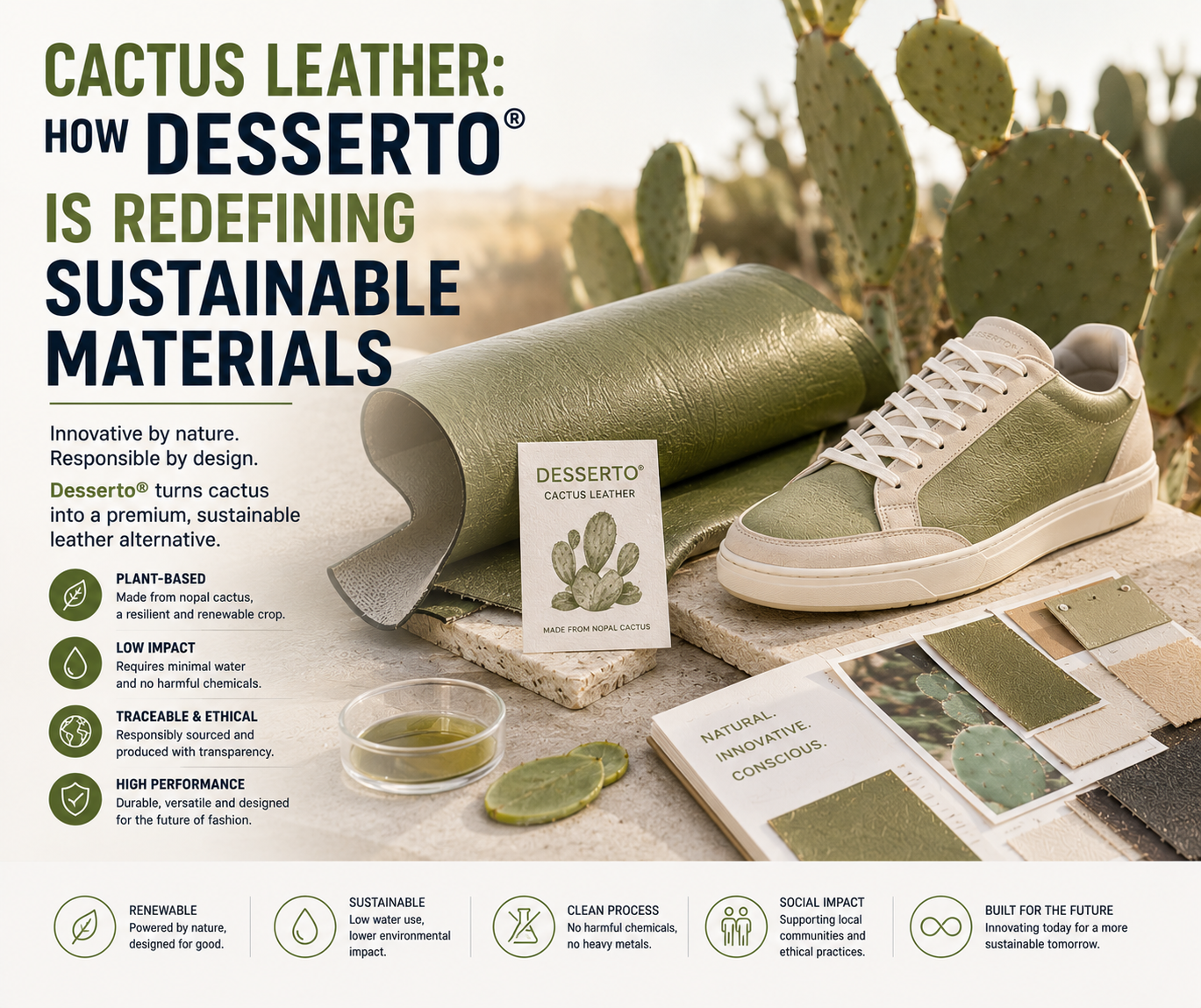
Cactus leather is a sustainable, plant-based leather alternative made from nopal cactus leaves. Developed by Desserto® in Mexico, it offers a vegan, low-water, and low-carbon alternative to traditional leather while providing the durability, flexibility, and aesthetics required for fashion, footwear, and accessories manufacturing.
Why Is Cactus Leather Becoming a Leading Sustainable Material?
Sustainability is no longer a niche goal, it’s the new foundation of material innovation. Among the many bio-based alternatives redefining fashion and footwear, cactus leather stands out for its unique origin and environmental impact.
Born in the Mexican desert, this innovative material bridges nature and technology in a way few others can, making it increasingly attractive for brands seeking sustainable footwear materials and responsible sourcing solutions.
What Makes Cactus Leather an Innovative Material?
Few materials illustrate the potential of plant-based innovation as clearly as cactus leather.
Developed in Mexico by Adrián López Velarde and Marte Cázarez, founders of Desserto® leather, it transforms the resilient nopal cactus into a versatile, durable, and vegan leather alternative.
What began as an effort to combine sustainability with material performance has evolved into one of the most recognized innovations in the global fashion and footwear industries.
How Is Cactus Leather Made?
The production process behind cactus leather material combines agricultural efficiency with modern material science.
The process typically includes:
- Harvesting mature nopal cactus leaves without damaging the plant.
- Cleaning and processing the leaves into organic biomass.
- Naturally sun-drying the material for several days.
- Blending the biomass with bio-based binders.
- Finishing the material with coatings that replicate the texture, grain, and appearance of leather.
Unlike many conventional materials, this process requires minimal external resources and produces significantly lower environmental impacts.
Why Is Cactus Leather Considered Sustainable?
One of the biggest advantages of cactus leather is its ability to deliver functionality while minimizing environmental impact.
| Sustainability Factor | Benefit |
| Water Consumption | Requires only natural rainfall |
| Land Use | No deforestation required |
| Chemical Use | No chromium tanning, PVC, or toxic chemicals |
| Carbon Impact | Cactus plants naturally absorb CO₂ |
| Regeneration | Leaves regrow every 6–8 months |
| Biodiversity | Supports cultivation in arid regions with minimal intervention |
Compared to animal leather and petroleum-based synthetic leather, cactus leather offers a significantly lower environmental footprint.
Where Is Cactus Leather Used?
The versatility of Desserto® cactus leather has enabled adoption across multiple industries.
Current applications include:
- Footwear uppers and sneaker components
- Handbags and luxury accessories
- Small leather goods
- Furniture upholstery
- Automotive interiors
Its combination of softness, dimensional stability, and color consistency makes it particularly attractive for brands looking to combine sustainability with premium aesthetics.
Several global brands have already explored or adopted cactus leather in product development, demonstrating its growing commercial viability.
Why Are Footwear Brands Interested in Cactus Leather?
For footwear brands, cactus leather offers a compelling balance between sustainability and performance.
Key advantages include:
- Lightweight construction
- Consistent surface quality
- Good flexibility for cutting and stitching
- Strong visual appeal
- Traceable sourcing story
- Alignment with ESG and sustainability goals
As consumer demand for eco-friendly leather alternatives continues to rise, cactus leather provides brands with a practical way to differentiate products while reducing environmental impact.
How Is Desserto Shaping the Future of Plant-Based Leather?
The success of Desserto® reflects a broader shift in material innovation — moving from extraction-based systems toward regenerative production models.
Rather than relying on resource-intensive raw materials, plant-based leather solutions like cactus leather leverage renewable agricultural inputs and circular thinking.
Ongoing investments in material science continue to improve:
- Durability
- Flexibility
- Abrasion resistance
- Scalability
- Manufacturing compatibility
These advancements are helping position cactus leather as one of the most promising bio-based materials for future footwear and fashion collections.
Explore additional plant based options and discover if apple leather is ready for production here
What Does the Future Hold for Cactus Leather?
The rise of cactus leather demonstrates how innovation can emerge from nature itself. By combining traditional agricultural knowledge with advanced material engineering, Desserto® has created a material that aligns environmental responsibility with commercial viability.
As brands continue searching for sustainable alternatives to conventional leather, cactus leather is likely to play an increasingly important role in footwear sourcing, product development, and circular fashion strategies.
For fashion and footwear brands, it represents more than a material innovation—it represents a new approach to design, sourcing, and responsible manufacturing.