
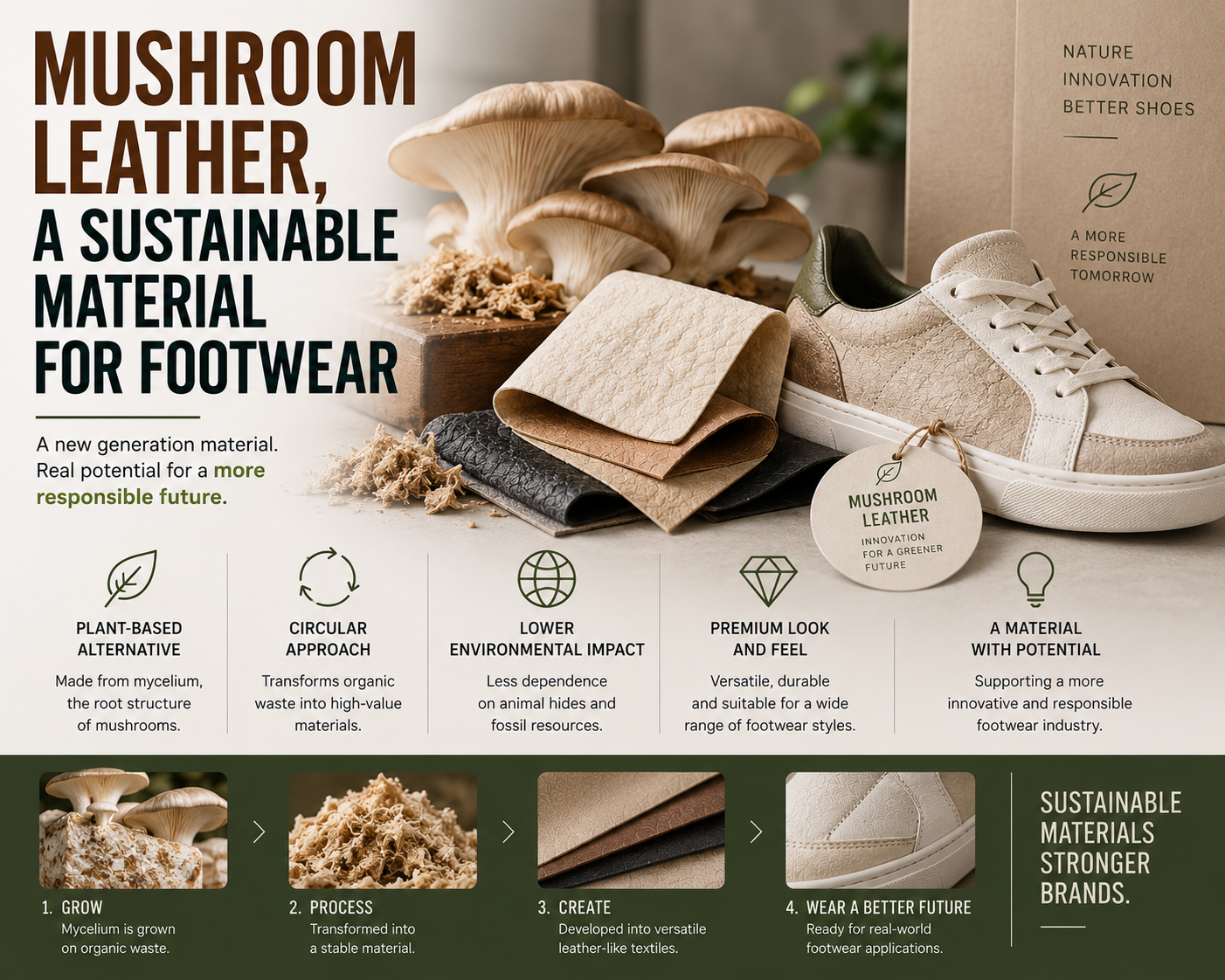
Sustainability in fashion is evolving — and “mushroom leather” is one of the most exciting breakthroughs leading the change. Made from mycelium, the root-like structure of fungi, this innovative material offers a sustainable, biodegradable, and cruelty-free alternative to traditional animal leather.
What Is Mushroom Leather?
Mushroom leather (also known as mycelium leather) is a bio-fabricated material produced by growing fungal cells on natural substrates such as sawdust or agricultural waste.
The process can take only a few weeks, consuming minimal water and energy compared to animal leather tanning or some synthetic alternatives.
After harvesting, the mycelium is processed and treated to achieve a texture and appearance similar to natural leather — soft, durable, and versatile.
Why Does Mushroom Leather Matter?
As brands and consumers look for eco-friendly and ethical materials, mushroom leather stands out for several reasons:
- Sustainable production: low environmental impact and renewable feedstock.
- Biodegradable potential: can offer a lower-impact alternative to synthetic “vegan leathers”alternatives made from plastics, depending on its composition and finish.
- Cruelty-free: no animal-derived components.
- Versatile: suitable for footwear, bags, and accessories.
In short, mushroom leather bridges the gap between innovation and nature, offering both performance and purpose.
Which Leading Brands are Embracing Mushroom Leather?
Several global fashion leaders have already invested in this innovation:
- Adidas developed a prototype of its classic Stan Smith sneaker using Mylo™.
- Stella McCartney presented the first Mylo™ handbag during Paris Fashion Week.
- Hermès collaborated with MycoWorks on the Victoria travel bag made from mushroom leather.
These early adopters signal a clear shift: sustainable materials are no longer a niche experiment — they are becoming a strategic advantage.
Is Mushroom Leather Ready for Footwear Production?
While still in the early stages of industrial scaling, mushroom leather is rapidly improving in consistency, durability, and availability. As the technology matures, footwear producers will be able to explore its incorporation into production lines — combining sustainability with innovation.
In conclusion, mushroom leather isn’t just another trend — it’s a tangible step toward a more circular, ethical, and sustainable fashion industry. For footwear brands, it represents the fusion of design, responsibility, and innovation.