
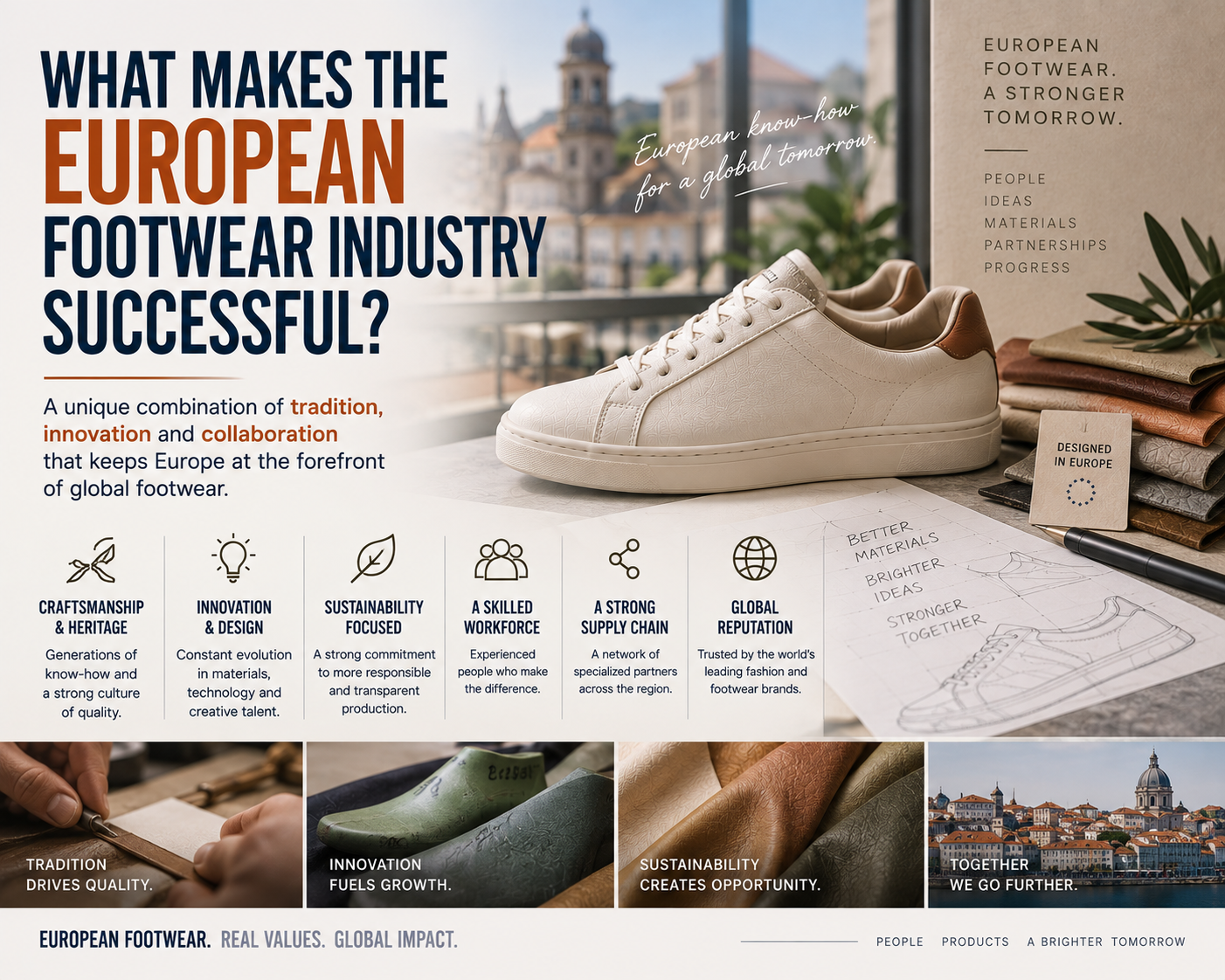
The European footwear industry stands as one of the most respected and dynamic sectors in global manufacturing. As one of the world’s largest footwear markets by value, the EU has built a reputation for quality, innovation, and sustainability. Several strategic factors contribute to this ongoing success…
1. Why Is European Footwear Known for Quality?
European footwear is globally recognized for its superior craftsmanship, durability, and design excellence. Brands like Clarks, Geox, and ECCO have earned consumer trust by consistently delivering high-quality products. Investments in skilled labor and premium materials help maintain these high standards, setting European footwear apart in the global market.
2. How Does Technology Drive the European Footwear Industry?
The European footwear industry leads in technological advancements, from 3D printing and CAD systems to automated production lines. These tools enable faster development cycles, precision manufacturing, and more complex, customizable designs. This innovation keeps European brands competitive and responsive to changing consumer trends.
3. What Role Do Industry Associations Play?
Associations such as the European Confederation of the Footwear Industry (CEC) provide crucial support through advocacy, international promotion, and policy development. National organizations in Italy, Spain, and Portugal further enhance visibility and competitiveness for local manufacturers.
4. Why Are Collaborative Ecosystems Important?
The success of the European footwear industry also stems from strong collaboration between manufacturers, designers, suppliers, and research institutions. These networks foster shared knowledge, encourage best practices, and drive product and process innovation.
5. How Do Research Centers Support Footwear Innovation?
Institutes like INESCOP (Spain) and CTCP (Portugal) are leading hubs for R&D in materials, biomechanics, and sustainability. Their work enables the adoption of innovations, helping European producers stay ahead in a highly competitive industry.
6. Is Sustainable Footwear Manufacturing a Priority in European?
Sustainability is a core value in the European footwear industry. EU manufacturers are pioneers in using eco-friendly materials, including recycled and bio-based materials, as well as energy-efficient production methods. This eco-conscious approach attracts environmentally aware consumers and supports compliance with evolving EU regulations.
7. How Does Ethical Production Build Trust?
With robust labor laws and a focus on ethical working conditions, European footwear producers build trust with consumers who value transparency. Many brands now share supply chain information, highlighting fair wages, safety standards, and responsible sourcing.
8. How Responsive Is the European Footwear Market?
From athleisure and vegan footwear to customization trends, European footwear manufacturers are agile and adaptable. Brands like Adidas, Veja, and Nike, with European operations, respond to evolving consumer demands and market trends.
9. How Is Digital Transformation Changing the Industry?
The digitalization of the European footwear industry has unlocked new efficiencies. Brands are using e-commerce, social media, and data analytics to streamline production, personalize marketing, and improve customer engagement.
10. What Makes the European Footwear Industry Competitive?
The European footwear industry thrives on a balanced mix of tradition and innovation. A commitment to quality, sustainability, and ethical practices, supported by robust institutions and digital tools, positions Europe as a global footwear leader — ready to meet future challenges with confidence.