
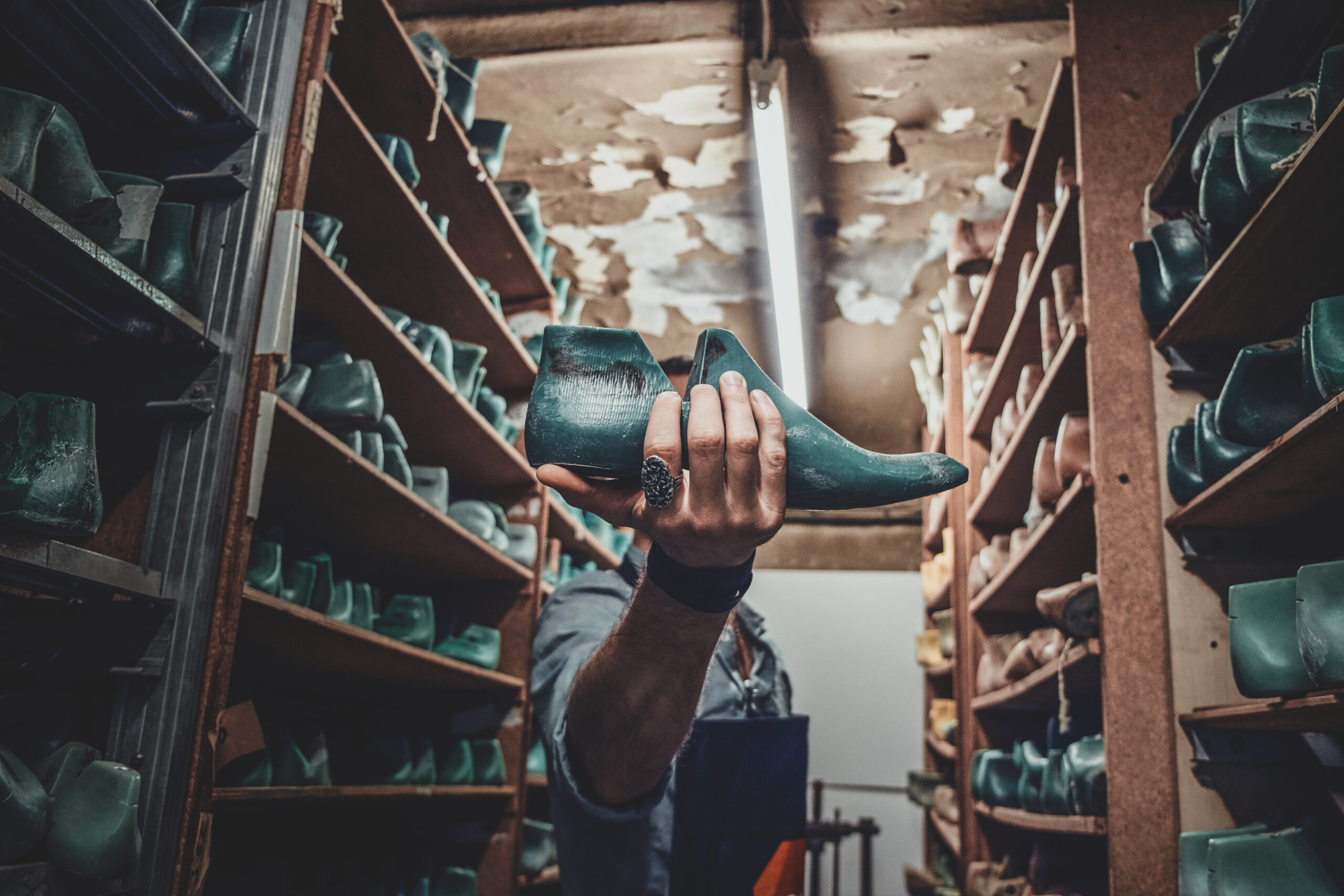
Behind every comfortable, perfectly balanced shoe lies a process of engineering that begins long before production starts: the development of the last. The creation of a footwear last is both a technical science and an artistic discipline, blending geometry, biomechanics, and aesthetic design to define how a shoe feels and performs.
Footwear Last: Concept Definition and Posture Design
The development of a last begins with a clear definition of the shoe’s purpose. Whether engineering a formal loafer, a rugged hiking boot, or a minimalist sneaker, each style demands a specific posture and weight distribution. Last engineers collaborate to translate functional needs into physical dimensions, determining:
- Toe Box Geometry: Balancing aesthetic silhouette with anatomical clearance.
- Heel Pitch and Height: Defining the lateral stability and stance of the wearer.
- Instep Volume: Ensuring secure fit without compromising blood flow or comfort.
- Ergonomic Silhouette: Aligning the last’s volume with the specific demographic data of the target market.
Discover more about the footwear last here
Footwear Last: Hybrid Craftsmanship with Hand-Sculpting and 3D Digitalization
Even in a highly automated industry, the initial phase of last creation remains deeply artisanal. An experienced craftsman shapes the prototype manually, carving a solid block of high-density resin to establish the “Master Last.”
Using rasps and files, the artisan sculpts the contours, refining the arch balance and heel curvature. This handcrafted model serves as the primary reference for the shoe’s personality. Once the form reaches the desired harmony, it is 3D scanned to capture every millimeter of its curvature. This digital twin is then refined in CAD software, allowing for micro-adjustments to volume or grading that would be impossible to achieve by hand alone.
Footwear Last: Prototype Integration and Fit Validation
Once the physical last is produced, a prototype shoe is constructed around it to evaluate the “Last-to-Foot” relationship. This stage is critical for verifying technical benchmarks:
- Volume Distribution: Assessing how the last adapts to various foot widths and arch heights.
- Balance and Alignment: Ensuring a natural transition from heel-strike to toe-off.
- Aesthetic Proportions: Verifying that the physical silhouette matches the original design intent.
- Incremental Adjustments: Perfecting the geometry through iterations as small as 0.2 millimeters based on real-world wear testing.
Digital Grading and Industrial Scalability
Upon approval of the master last, the form is digitally graded to create a full-size range. Modern software automates this scaling while preserving proportional consistency. Each variant is reviewed to ensure that the heel height and toe curvature remain balanced across the smallest and largest sizes.
In mass production, these forms must withstand thousands of high-pressure cycles. Factories utilize high-density plastic lasts equipped with metal hinges or split systems, allowing the last to be collapsed and removed easily once the upper has been shaped and bonded to the sole.
Explore how midsoles and footbeds impact comfort and performance here
Data-Driven Innovation in Last Development
Digitalization continues to redefine how lasts are conceived and managed. With 3D foot scanning and AI-assisted design, the footwear industry can now create region-specific fits or personalized lasts tailored to real-world biometric data. By combining traditional craft expertise with these digital tools, brands achieve a superior blend of comfort, production efficiency, and brand identity. Ultimately, the footwear last remains the silent foundation of every pair — defining not just how a shoe looks, but how it feels.
Explore the engineering of a shoe outsole here