
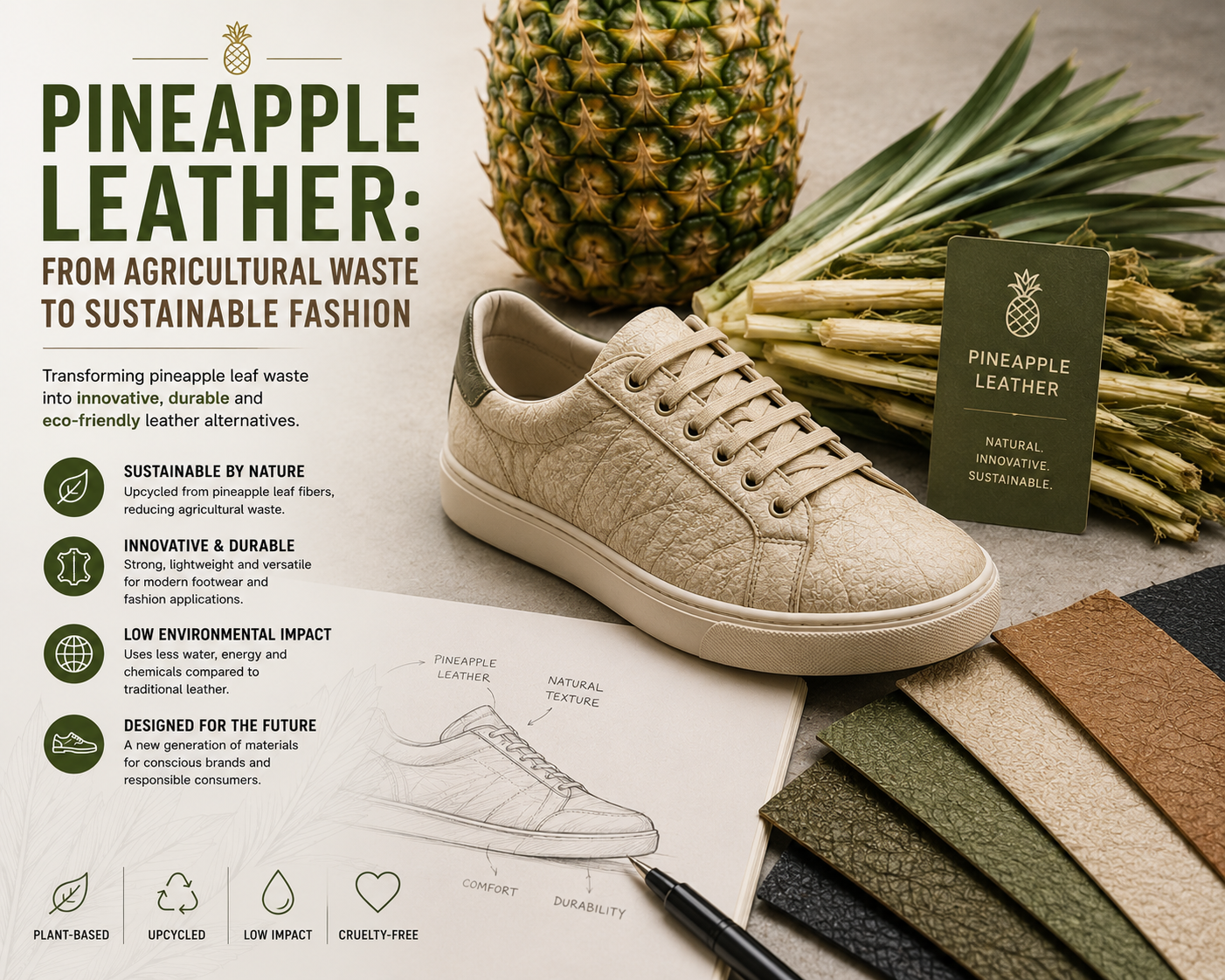
Pineapple leather, commercially known as Piñatex, is a plant-based material made from pineapple leaf fibers. Developed as a sustainable alternative to animal leather, it transforms agricultural waste into a versatile material used in footwear, fashion accessories, and interior applications, supporting circular economy principles and responsible production.
What Is Pineapple Leather?
What if agricultural waste could become luxury fashion? That question inspired the development of pineapple leather, also known as Piñatex, an innovative material that transforms discarded pineapple leaves into a durable, lightweight, and sustainable leather alternative.
As brands continue to seek environmentally responsible materials, pineapple leather has emerged as one of the most recognized examples of circular design within the fashion and footwear industries.
What Is the Origin of Pineapple Leather?
The story of Piñatex began with Dra. Carmen Hijosa, a Spanish entrepreneur and designer who spent many years working within the conventional leather sector. During her time in the Philippines, she observed the strength and fineness of pineapple leaf fibers and recognized their potential as a textile material.
Following extensive research and development, Ananas Anam introduced Piñatex, a material manufactured from cellulose fibers extracted from pineapple leaves, a byproduct of fruit cultivation that would otherwise be discarded.
This innovation has transformed agricultural waste into a valuable resource for sustainable manufacturing.
How Is Pineapple Leather Made?
The production process behind pineapple leather illustrates the principles of regenerative and circular design.
After pineapple harvesting, leaves are collected directly from farms without requiring additional land, water, or agricultural inputs. Fibers are then extracted and purified through mechanical and enzymatic treatments before being transformed into a non-woven mesh known as Piñafelt.
This structure is subsequently finished, coated, and dyed to create a material that closely resembles leather in appearance and texture.
The final product is lightweight, flexible, and partially biodegradable, offering an innovative solution for brands seeking sustainable material alternatives.
Why Does Pineapple Leather Matter?
Pineapple leather represents much more than a new material innovation. It demonstrates how waste streams can be reintegrated into manufacturing systems to create environmental, social, and economic value.
Its environmental benefits include lower water consumption compared with animal leather production, reduced reliance on chemical-intensive tanning processes, and the elimination of animal-derived components. Additionally, the use of agricultural byproducts generates supplementary income opportunities for farming communities and contributes to a more circular economy.
By transforming waste into premium materials, pineapple leather offers a compelling example of how sustainability can be integrated into modern product development.
How Is Pineapple Leather Used in Fashion and Footwear?
Piñatex has already established itself across multiple industries, demonstrating its versatility and design potential.
It is increasingly used in handbags, accessories, upholstery applications, and sustainable footwear collections. Its breathability, texture, and lightweight properties make it particularly suitable for casual footwear and lifestyle products.
Several global brands have explored pineapple leather within their sustainability initiatives, including Hugo Boss, H&M, Puma, and Nae Vegan Shoes.
While the material continues to evolve in terms of durability for demanding applications, it already presents significant opportunities for brands developing eco-conscious collections and sustainable product concepts.
Is Pineapple Leather the Future of Sustainable Materials?
From waste to wardrobe, pineapple leather is reshaping how the industry thinks about materials. It demonstrates that creativity, innovation, and environmental responsibility can coexist without sacrificing aesthetics or functionality.
For fashion and footwear brands, adopting pineapple leather is not simply about following an environmental trend. It represents an opportunity to embrace regenerative design principles, reduce environmental impact, and develop products that align with evolving consumer expectations.
As research advances and industrial scalability improves, pineapple leather is expected to become an increasingly important component of sustainable fashion and footwear supply chains.