
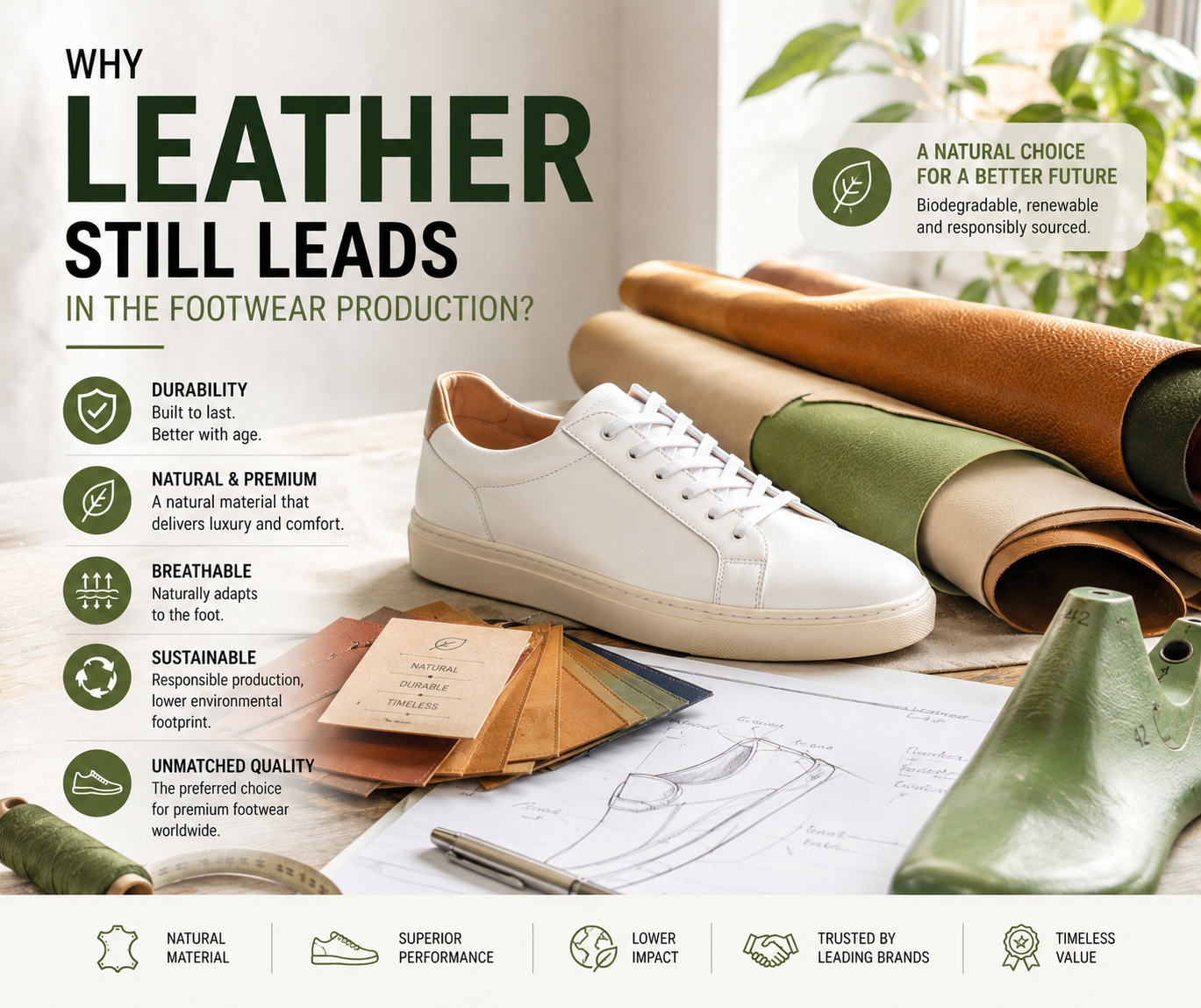
Leather has long held a special place in the fashion and footwear industry. It’s durable, elegant, and often considered a timeless investment. But in an era of growing environmental consciousness and innovation in material science, many brands and consumers are asking: Is leather still the best solution? Let’s explore the facts — and why leather continues to be a smart choice in footwear when used responsibly.
Vegan Alternatives vs. Synthetic Leather Realities
“Vegan leather” is a popular and illegal term used to describe non-leather materials that mimic the look and feel of real leather. Some versions are made from plant-based materials like apple skins, cork, or cactus. Others, more commonly, are made from plastics like PU (polyurethane) or PVC (polyvinyl chloride).
While the idea of avoiding animal products is appealing to many, it’s important to ask whether these alternatives are truly sustainable or simply a case of greenwashing.
- Petrochemical Footprint: Plastic-based synthetic leather takes years to decompose and may contain microplastics harmful to both the environment and wearer.
- Scalability Bottlenecks: Plant-based versions often lack durability and are still in the early phases of development — meaning inconsistent quality and limited scalability.
In short: Not all vegan leathers are created equal, and many are not yet suitable for commercial footwear production.
Lifecycle Analysis: Is Leather Unsustainable by Nature?
Leather is often criticized for its environmental impact — especially due to the chemicals used in conventional tanning processes. However, there’s another side to the story.
- Material Longevity: Real leather footwear is extremely durable, often lasting for decades, which helps reduce waste and landfill contribution.
- Byproduct Valorization: When tanned using vegetable-based methods and ethically sourced as a by-product of the food industry, leather becomes a much more sustainable option.
At Mindstep, we work closely with certified tanneries and suppliers who prioritize cleaner, safer tanning methods and ethical labor practices.
Circular Economy: What About Recycled Leather?
Another innovative solution is recycled leather. This involves sourcing second-hand or unused leather goods (like jackets), deconstructing them, and repurposing the material into new products — reducing waste and extending the life of existing resources.
Sourcing Framework: What’s the Right Choice?
Choosing between real leather footwear and synthetic leather alternatives isn’t black or white. It depends on your brand values, product goals, and the lifecycle impact of each material.
- The Leather Protocol: If you work with leather, prioritize vegetable tanning and ethical sourcing.
- The Synthetic Protocol: If you opt for vegan alternatives, ensure they are truly sustainable, not just synthetic marketing tools.
The Bottom Line on Sustainable Procurement
Leather, when responsibly sourced and processed, still offers one of the most durable and reliable materials for footwear. Whether your focus is longevity, quality, or environmental impact, the key is informed sourcing.