
The footwear industry continues to evolve rapidly. Between shorter timelines, pricing pressure, lower MOQs and increasing quality expectations, brands are looking for sourcing partners that can deliver far more than production capacity alone. To better understand what truly matters to footwear brands today, we gathered insights from industry professionals working across sourcing, development and manufacturing. Below are some of the key findings…
Where Is Most Footwear Produced Today?
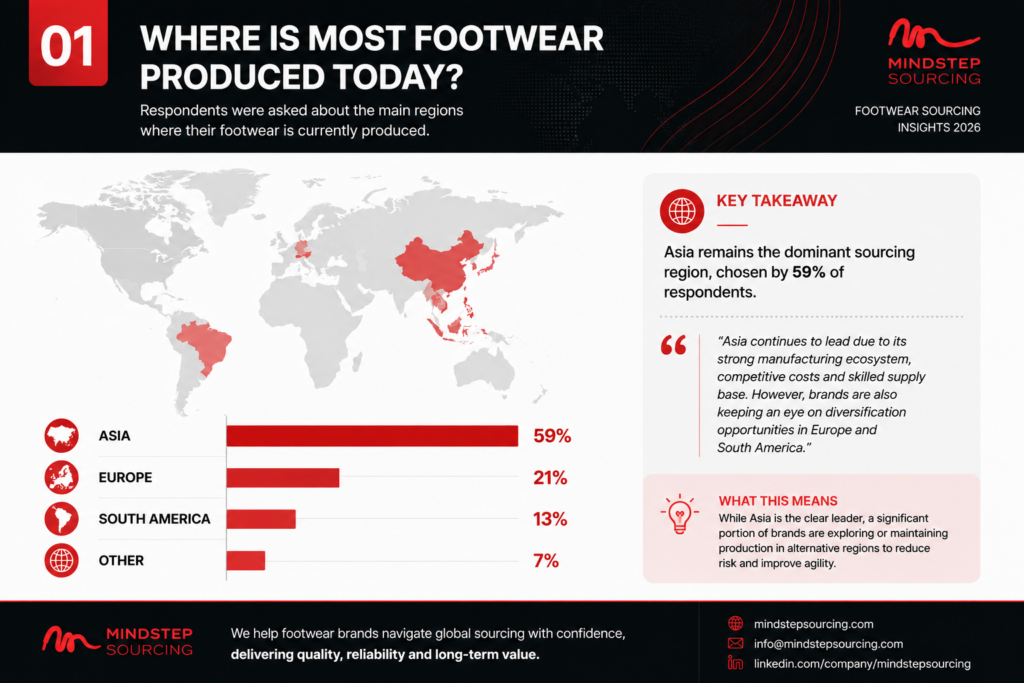
Asia remains the dominant sourcing region among respondents, reflecting its strong manufacturing ecosystem, pricing competitiveness and production capacity. At the same time, Europe continues to maintain an important role, particularly for brands seeking flexibility, lower MOQs, shorter lead times and closer communication. This reinforces an important industry trend: many brands are increasingly balancing global sourcing efficiency with operational agility and risk diversification.
Discover why Portugal is one of the best destinations for footwear production here
Which Materials Are Most Used in Footwear Collections?
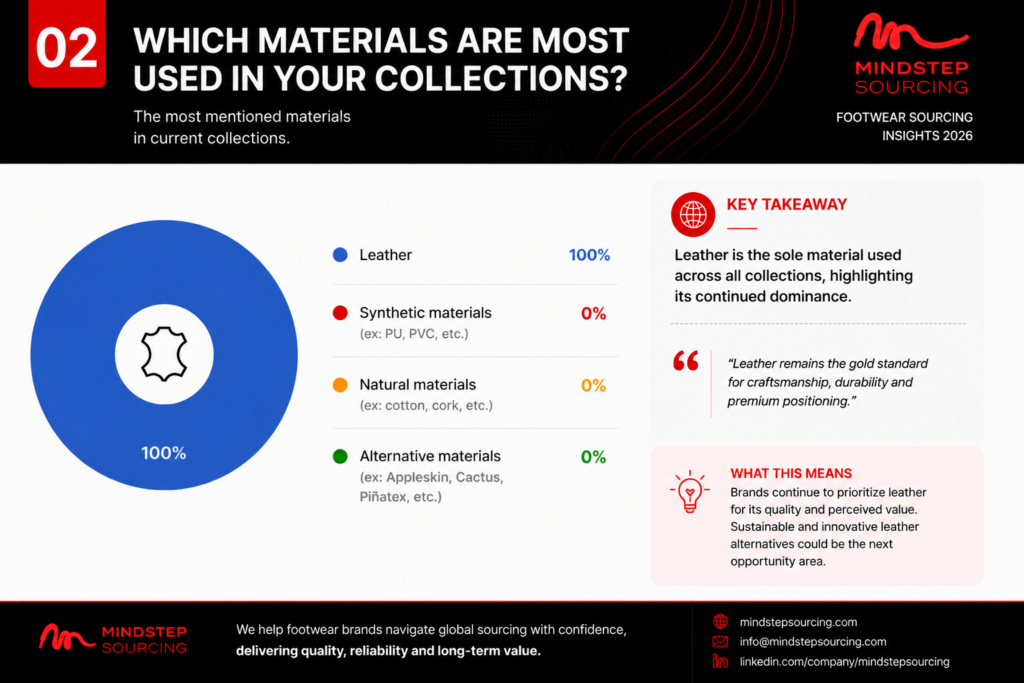
Leather remains the dominant material among respondents. This highlights the continued importance of durability, craftsmanship, premium positioning and perceived product value within the footwear industry. At the same time, interest in alternative and innovative materials continues to grow across the market, particularly as sustainability expectations evolve. For sourcing partners and manufacturers, this means flexibility in materials sourcing is becoming increasingly important.
Discover innovative leather alternatives in footwear manufacturing here
How Do Brands Usually Work?
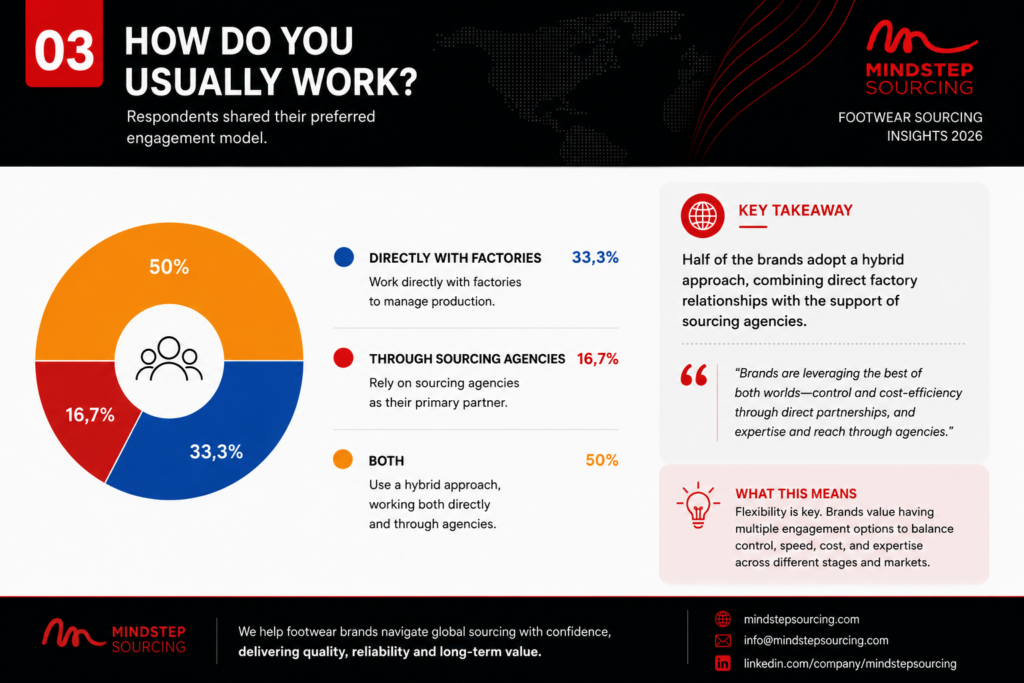
The survey reveals that many brands continue to work directly with factories, while a significant portion also value hybrid sourcing models. This reflects a growing need for support beyond manufacturing alone.
Today, brands increasingly expect sourcing partners to assist with:
- Product development
- Factory communication
- Material sourcing
- Quality control
- Faster problem-solving
The modern sourcing relationship is becoming more collaborative and operationally integrated.
Explore how to choose the right footwear sourcing agency for your brand here
What Is the Biggest Challenge When Sourcing Footwear?
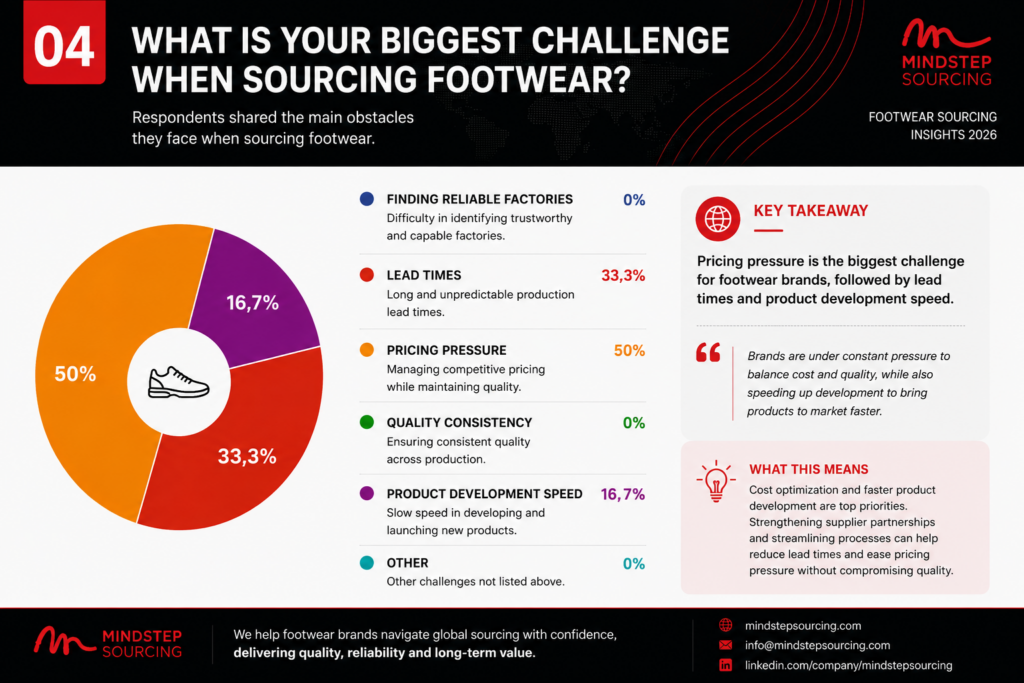
Pricing pressure emerged as the biggest challenge among respondents, followed by lead times and product development speed.
This reflects the increasingly difficult balance brands face between:
- Competitive retail pricing
- Quality expectations
- Faster collections
- Operational flexibility
For factories and sourcing partners, responsiveness and development efficiency are becoming major competitive advantages.
What Matters Most in a Factory or Sourcing Partner?
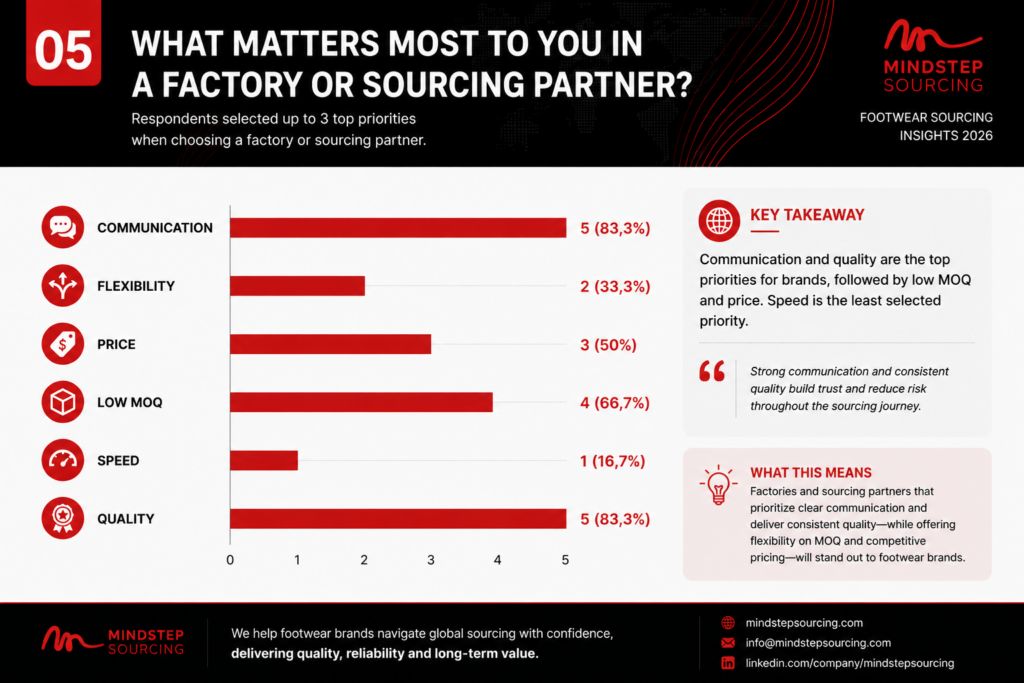
Communication and quality consistency ranked among the most valued factors when selecting a sourcing partner. Low MOQs and flexibility also scored highly, highlighting the growing importance of adaptability in today’s market. This confirms what many brands already experience daily:
good communication is often just as important as manufacturing capability itself.
Reliable follow-up, transparency and responsiveness increasingly define strong sourcing partnerships.
What Is the Usual MOQ Per Style?
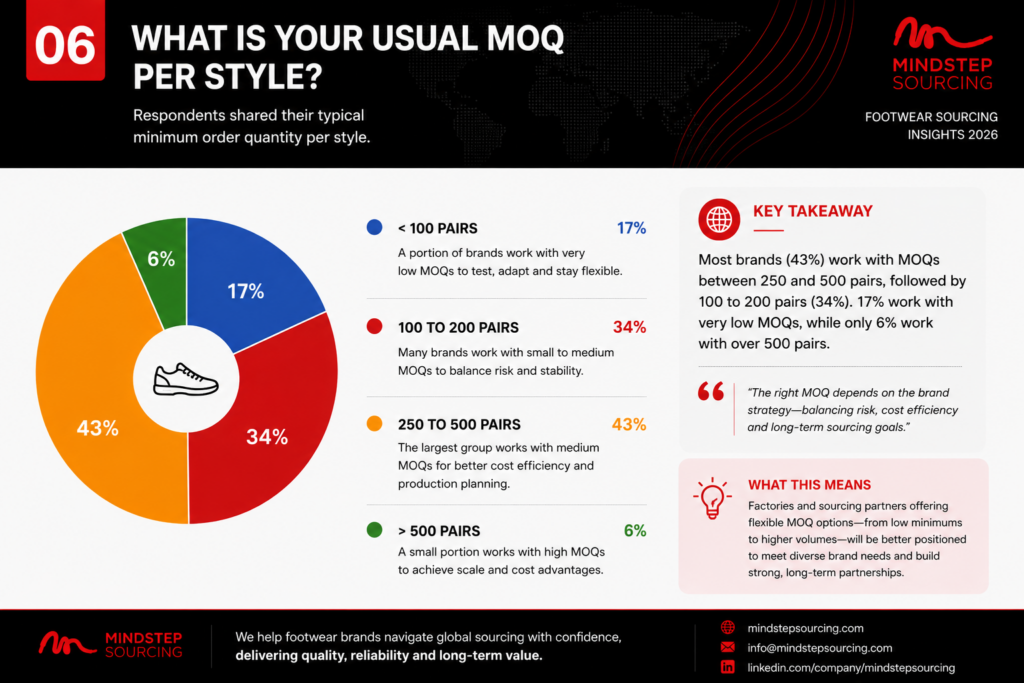
The majority of respondents indicated a preference for low to medium MOQs.
This reflects how brands are increasingly prioritizing:
- Flexibility
- Lower inventory risk
- Faster testing
- Smaller production runs
- Agile collection development
Factories capable of supporting flexible MOQ structures are likely to become increasingly attractive partners in the years ahead.
Discover why Portugal is a perfect destination for emerging footwear brands here
What Is the Biggest Frustration When Working With Factories or Sourcing Agencies?
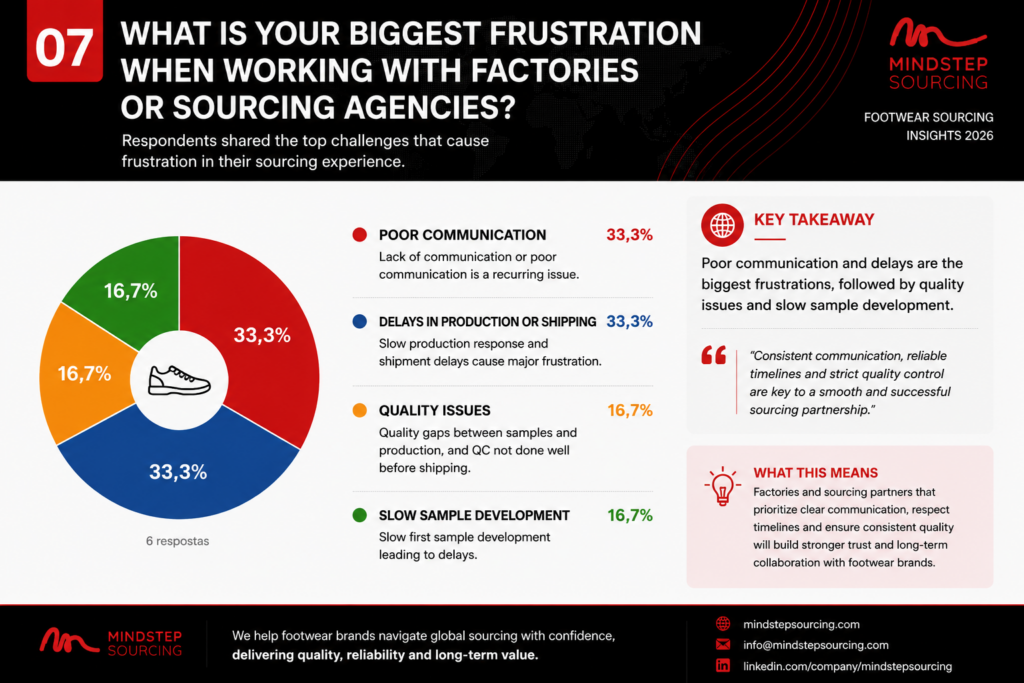
Poor communication and delays emerged as the most common frustrations among respondents. Quality inconsistencies and slow sample development were also recurring concerns. These responses reinforce an important reality within the footwear industry: Most sourcing frustrations are operational rather than purely price-related.
Brands increasingly value partners who can provide:
- Clear communication
- Reliable timelines
- Proactive follow-up
- Consistent quality standards
Final Thoughts
The footwear sourcing landscape is changing. Today, brands are not simply searching for factories.
They are looking for sourcing partners capable of combining:
- Quality
- Flexibility
- Communication
- Development support
- Reliability
- Faster execution
As supply chains continue to evolve, strong operational collaboration is becoming one of the industry’s most valuable competitive advantages.