
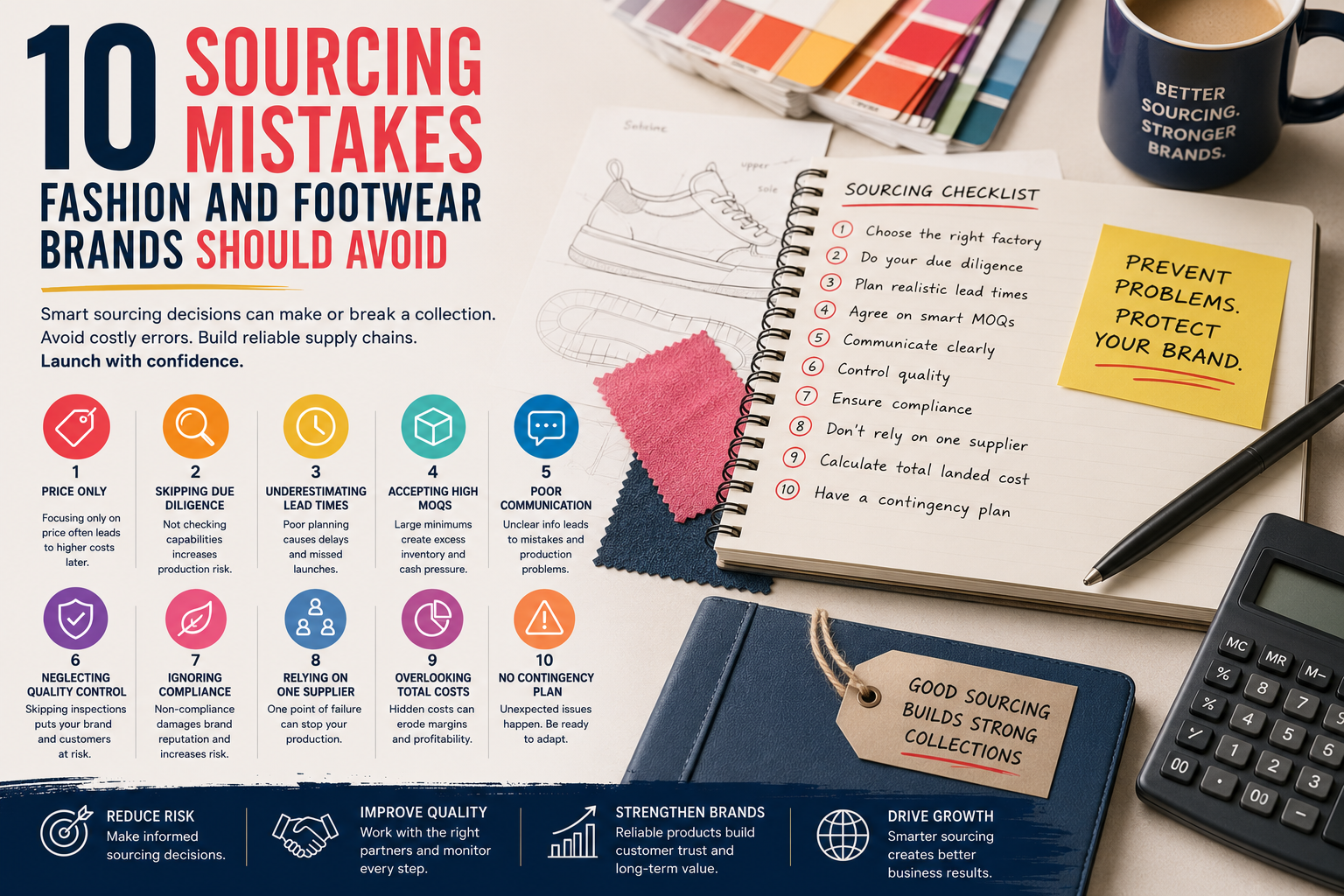
Choosing the right sourcing strategy can determine whether a product launch succeeds or fails. While many brands focus on product design, avoiding common sourcing mistakes is equally important for controlling costs, protecting quality, and building reliable supplier relationships.
Why Do Sourcing Mistakes Cost Brands So Much?
Sourcing is one of the most decisive stages of any production cycle, yet it is also one of the easiest places for expensive errors to occur. Small mistakes made before production begins can lead to delayed launches, quality issues, higher logistics costs, and strained supplier relationships.
Fortunately, most sourcing problems are preventable through careful planning, supplier evaluation, and transparent communication.
What Are the Most Common Sourcing Mistakes?
1. Choosing a Factory Based Only on Price
One of the most common sourcing mistakes is selecting a supplier solely because they offer the lowest quotation. A lower price can sometimes reflect compromises in materials, production standards, or labour practices, creating greater costs later through defects or delays.
Instead of focusing only on cost, evaluate suppliers based on reliability, production expertise, transparency, and long-term value.
2. Skipping Supplier Due Diligence
Choosing a manufacturer without verifying its capabilities significantly increases production risk. Supplier audits, certifications, client references, and production capacity should all be reviewed before placing an order.
Working with an experienced fashion sourcing agency can simplify this process by conducting factory assessments and identifying reliable manufacturing partners.
3. Underestimating Production Lead Times
Production rarely moves exactly according to schedule. Sampling revisions, raw material availability, manufacturing capacity, shipping delays, and customs clearance can all extend delivery dates.
Building realistic production buffers allows brands to protect launch schedules and reduce costly last-minute decisions.
4. Accepting Excessively High MOQs
Agreeing to large minimum order quantities simply to obtain a lower unit price often creates unnecessary inventory and cash-flow pressure.
Brands should negotiate production volumes that match actual demand or partner with sourcing specialists who can help secure more flexible manufacturing arrangements.
5. Poor Communication with Suppliers
Many production issues originate from incomplete technical information or inconsistent communication throughout development.
Clear documentation, regular progress updates, and written confirmation of design changes help minimise misunderstandings and maintain alignment between brands and manufacturers.
6. Neglecting Quality Control
Skipping factory inspections during production or before shipment exposes brands to unnecessary quality risks.
An effective quality management process should include production monitoring, inline inspections, and final pre-shipment checks to identify problems before products reach customers.
7. Ignoring Sustainability and Compliance
Modern sourcing decisions extend beyond cost and quality. Brands are increasingly expected to work with manufacturers that comply with labour regulations, environmental standards, and responsible sourcing practices.
Selecting compliant suppliers protects brand reputation while supporting long-term sustainability goals.
8. Relying on a Single Supplier
Depending entirely on one factory creates unnecessary operational risk. Political uncertainty, raw material shortages, labour issues, or equipment failures can quickly interrupt production.
Developing relationships with qualified suppliers across multiple regions improves flexibility and strengthens supply chain resilience.
9. Overlooking Total Landed Costs
The factory quotation represents only part of the overall sourcing cost. Freight charges, customs duties, warehousing, insurance, currency fluctuations, and inland transport all affect profitability.
Successful sourcing decisions consider total landed cost rather than focusing exclusively on manufacturing price.
10. Failing to Prepare a Contingency Plan
Even the best sourcing strategies encounter unexpected disruptions. Shipping delays, material shortages, and production interruptions can occur without warning.
Brands that establish contingency plans, alternative suppliers, and flexible logistics options are better positioned to maintain production continuity when challenges arise.
How Can Fashion Brands Build a Stronger Sourcing Strategy?
Avoiding sourcing mistakes requires more than reacting to problems as they arise. Successful brands adopt a proactive sourcing strategy built on supplier evaluation, transparent communication, realistic planning, and continuous quality management.
Working with an experienced sourcing partner also provides access to trusted factory networks, production oversight, and local expertise that reduces risk throughout the manufacturing process.
For fashion and footwear brands, strong sourcing practices do more than prevent costly disruptions—they create more reliable supply chains, improve product quality, and support sustainable long-term growth.