
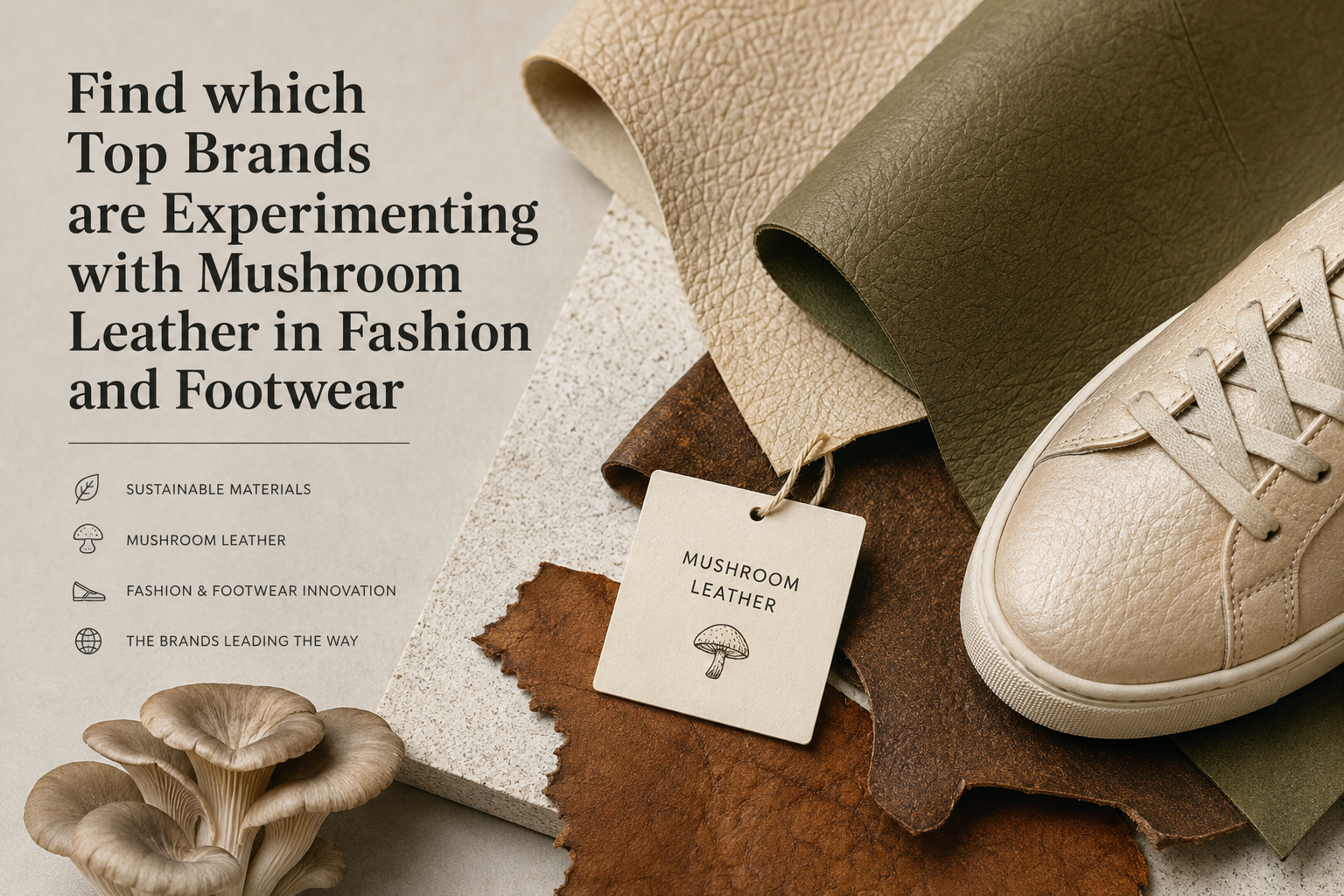
The rise of mushroom leather has caught the attention of some of the world’s most innovative fashion houses. As sustainability becomes a competitive advantage, brands are increasingly exploring mycelium-based materials for footwear and accessories.
For footwear brands, mushroom leather footwear represents an emerging opportunity to combine material innovation, sustainability, and premium design. However, understanding how leading brands are testing these materials is essential before integrating them into a product development or sourcing strategy.
Why Are Brands Turning to Mushroom Leather?
Luxury and performance brands are under increasing pressure to reduce environmental impact while maintaining premium quality. Mushroom leather, also known as mycelium leather, is lightweight, renewable, and animal-free, offering brands a potential way to align innovation with sustainability.
This has made mycelium-based materials one of the most anticipated developments in the next generation of fashion and sustainable footwear manufacturing.
For product development teams, the appeal goes beyond sustainability. Material consistency, surface quality, flexibility, weight, and compatibility with existing footwear manufacturing processes are all important factors when evaluating whether mushroom leather is suitable for commercial production.
How Is Adidas Using Mushroom Leather?
Adidas was among the first global sportswear companies to experiment with mushroom leather. In collaboration with Bolt Threads, the brand unveiled a prototype of its iconic Stan Smith Mylo™ sneaker, demonstrating how bio-based materials could be incorporated into a recognizable footwear silhouette.
Although the material did not progress into full-scale commercial production, Adidas’ early adoption demonstrated the potential for mycelium-based materials to combine performance, aesthetics, and a strong sustainability narrative.
For footwear brands, the project also highlights an important lesson: testing an emerging material through prototypes or limited collections can provide valuable insight before committing to larger-scale production.
How Is Stella McCartney Using Mushroom Leather?
Few designers have championed cruelty-free fashion as consistently as Stella McCartney. Her partnership with Bolt Threads brought the first Mylo™ handbag to the runway, demonstrating that luxury design and biomaterial innovation can coexist.
By publicly showcasing mushroom leather, McCartney helped position mycelium materials as a serious alternative for premium fashion applications rather than simply an experimental sustainability concept.
For brands developing premium accessories or footwear, this type of application can also strengthen the storytelling around a new material while allowing designers to explore different textures, finishes, and construction possibilities.
Why Is Hermès Exploring Mycelium Leather?
When Hermès partnered with MycoWorks, it sent a clear message that even heritage luxury brands were exploring sustainable material innovation.
The collaboration resulted in the Victoria bag, developed using Reishi™ mycelium leather, combining traditional luxury craftsmanship with an emerging biomaterial. This fusion of traditional savoir-faire and material innovation illustrates the broader shift taking place across the luxury landscape.
For sourcing and product development teams, these collaborations demonstrate how emerging materials can be evaluated not only for their environmental profile but also for their ability to meet the aesthetic and technical expectations of premium products.
Which Other Brands Are Exploring Mushroom Leather?
Beyond these major names, a growing number of emerging brands and designers are testing mushroom leather in footwear, bags, and accessories. Companies such as Sway, Miomojo, and Allégorie have explored bio-based and vegan materials, demonstrating that material innovation is not limited to large corporations.
The growing number of experiments across the industry is helping create valuable knowledge around material performance, construction methods, finishing, and consumer acceptance.
As the technology develops, collaboration between material suppliers, footwear factories, and sourcing partners will be increasingly important for translating laboratory innovations into commercially viable products.
What Does Mushroom Leather Mean for Footwear Development?
The adoption of mushroom leather by major fashion brands is helping establish a precedent for broader material acceptance. As factories and R&D centers gain experience with biomaterials, scalability, consistency, and performance are expected to become increasingly important areas of development.
For footwear brands, the most practical approach may be to begin with controlled applications such as prototypes, capsule collections, limited editions, or selected upper components. This allows brands to evaluate material performance and manufacturing compatibility before considering larger production volumes.
The key considerations include material thickness, abrasion resistance, flexibility, bonding, stitching behavior, finishing, and compatibility with the selected footwear construction.
For brands working with a sourcing agency, early collaboration with material suppliers and factories can also help determine whether a specific mushroom leather formulation is suitable for the intended product.
Is Mushroom Leather Ready for Mainstream Footwear?
Mushroom leather is no longer purely a futuristic concept, but its readiness for mainstream footwear depends on the specific material formulation and application.
From Adidas and Stella McCartney to Hermès, pioneering brands have demonstrated that mycelium leather can support compelling fashion and luxury applications. The next stage is translating these successful prototypes and premium applications into materials that offer consistent performance, scalable supply, and commercially viable pricing.
For forward-thinking footwear brands, this makes mushroom leather worth exploring as part of a broader sustainable footwear materials strategy. Starting with prototypes and carefully selected applications can help brands understand its potential while the technology continues to mature.
Discover if Mushroom Leather is ready for footwear large production scale here
What Should Footwear Brands Consider Before Sourcing Mushroom Leather?
Before integrating mushroom leather into a footwear collection, brands should evaluate the material from both a product and supply-chain perspective. Performance requirements should be matched against the intended shoe category, construction method, expected wear, and target price point.
The sourcing process should also consider supplier capacity, minimum order quantities, certifications and material documentation, available thicknesses and finishes, factory compatibility, testing requirements, and expected lead times.
This is where an experienced footwear sourcing partner can add value by connecting material innovation with the right manufacturing capabilities and helping brands assess whether an emerging material is commercially viable.
Mushroom leather is helping redefine the conversation around sustainable footwear materials. Its development shows that sustainability and luxury do not have to move in opposite directions.
For brands, the opportunity is not simply to adopt a new material, but to understand how mycelium leather can fit into a commercially viable product strategy. As material technology, manufacturing expertise, and supply chains continue to develop, mushroom leather footwear could move from limited innovation projects toward a much broader role in the footwear industry.