
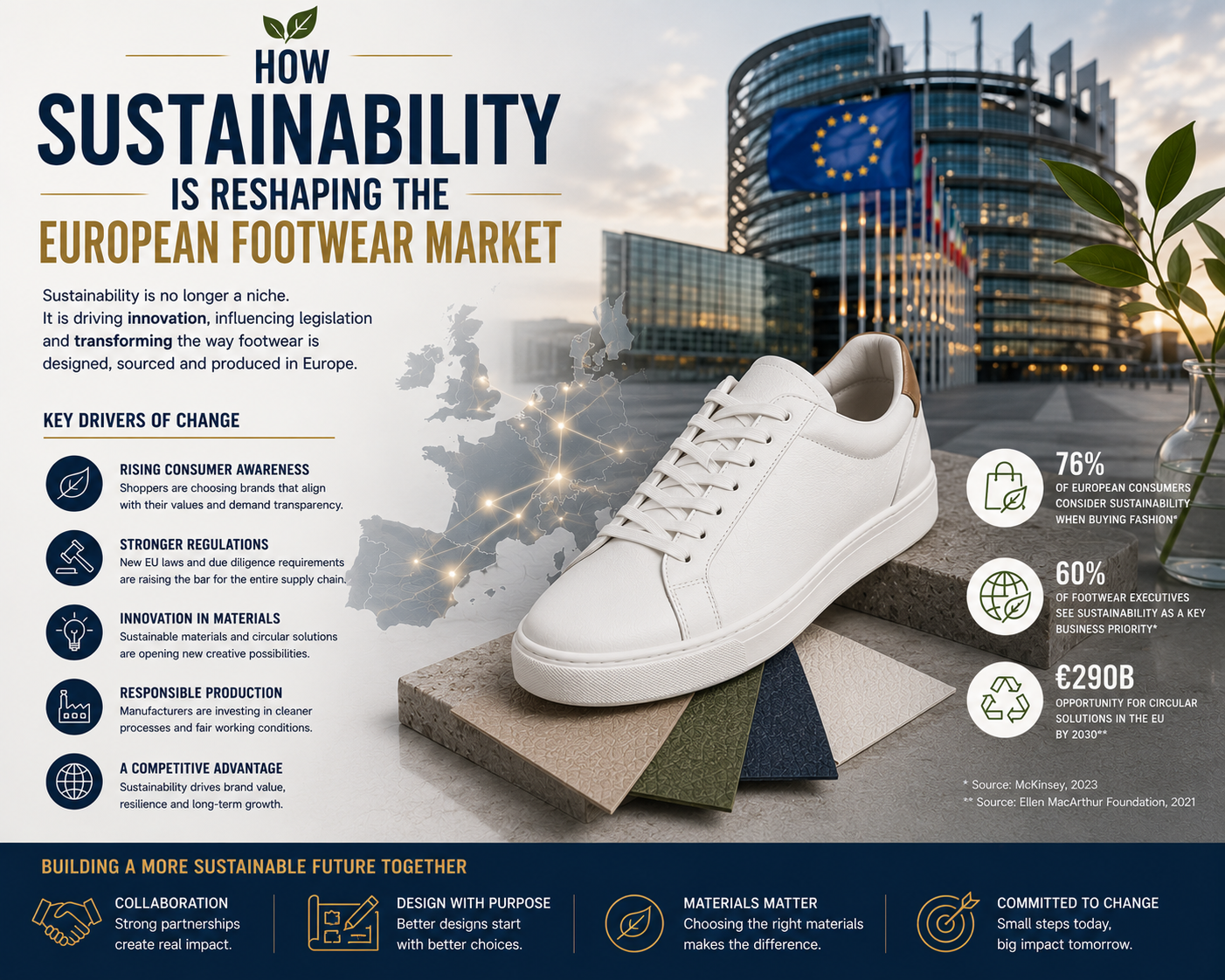
The European footwear market is increasingly driven by sustainability. Consumers expect ethical production, eco-friendly materials, and transparent supply chains, while new European regulations require brands to improve environmental performance, embrace circular practices, and demonstrate greater accountability throughout the product lifecycle.
Why Is Sustainability Transforming the European Footwear Market?
Sustainability is no longer optional, it’s becoming a defining factor in the European footwear market. Growing environmental awareness, changing consumer behavior, and stricter legislation are pushing brands to rethink sourcing, production, and product development strategies.
Today, sustainability influences every stage of footwear manufacturing, from material selection and factory operations to logistics and end-of-life product management.
How Are Consumer Expectations Changing?
European consumers increasingly evaluate footwear brands based on their environmental and social impact, not solely on aesthetics or price.
Eco-friendly materials such as organic cotton, recycled plastics, and plant-based leather alternatives are rapidly becoming industry standards, supporting the growth of eco-friendly footwear across European markets. At the same time, consumers expect brands to demonstrate ethical manufacturing practices, including fair wages, safe working environments, and transparent supply chains.
Another significant shift is the move toward minimalist and timeless design. Rather than purchasing fast-fashion products, many consumers now prefer durable footwear designed for longevity. Circular economy initiatives are also gaining traction, with brands introducing take-back programs, repair services, and modular product concepts that help extend product life cycles and reduce waste.
Which Regulations Are Influencing the European Footwear Market?
Sustainability within the European footwear market is increasingly shaped by regulatory frameworks that encourage responsible manufacturing and greater transparency.
Several initiatives are raising expectations for brands operating in Europe:
- REACH Regulation, which controls the use of hazardous substances in products.
- EU Ecolabel, recognizing products that meet high environmental standards.
- Waste Framework Directive, promoting waste reduction and circularity.
- Corporate Sustainability Reporting Directive (CSRD), requiring companies to disclose environmental and social performance data.
These regulations are transforming sustainability from a competitive advantage into a business necessity.
How Can Footwear Brands Adapt?
To remain competitive, brands must integrate sustainability into their long-term business strategies rather than treating it as a standalone initiative.
Sustainable material sourcing has become a priority, with many companies choosing recycled, biodegradable, or renewable materials to lower their environmental footprint and develop eco-friendly footwear collections that align with evolving consumer expectations. Ethical manufacturing practices are also increasingly important, supported by certifications such as B Corp and SA8000.
Brands are adopting lifecycle thinking, incorporating lifecycle assessments (LCAs) into product development and designing products that are easier to repair, recycle, and reuse. Transparent communication has become equally important, as consumers increasingly value honesty regarding sustainability commitments, progress, and challenges.
What Challenges Do Brands Face?
Although sustainability creates opportunities, it also presents operational and financial challenges. The cost of innovative materials can be higher, supply chains may become more complex, and ensuring traceability requires additional investment.
However, these obstacles can be addressed through stronger supplier collaboration, increased production volumes for sustainable materials, and better consumer education around product quality, durability, and long-term value.
As sustainable technologies mature and become more accessible, brands that invest early are likely to gain a competitive advantage.
The Future of the European Footwear Market
The future of the European footwear market will be shaped by companies capable of combining sustainability, innovation, and transparency. Consumers increasingly reward brands that align environmental responsibility with product quality, while regulators continue to set higher standards for accountability.
Brands that embrace ethical sourcing, circular design principles, and responsible manufacturing practices will be better positioned to build long-term trust, strengthen brand value, and remain competitive in an evolving marketplace.